
ARF Shant Student Association
DIGITALԱՐՑԱԽԸՈՂՋՈՒՆՈՒՄ Է ՁԵԶ
Artsakh's towns stand empty. But the record of them is kept here. The dates, the places, and the documents behind each one, hosted where nobody can quietly take it offline.
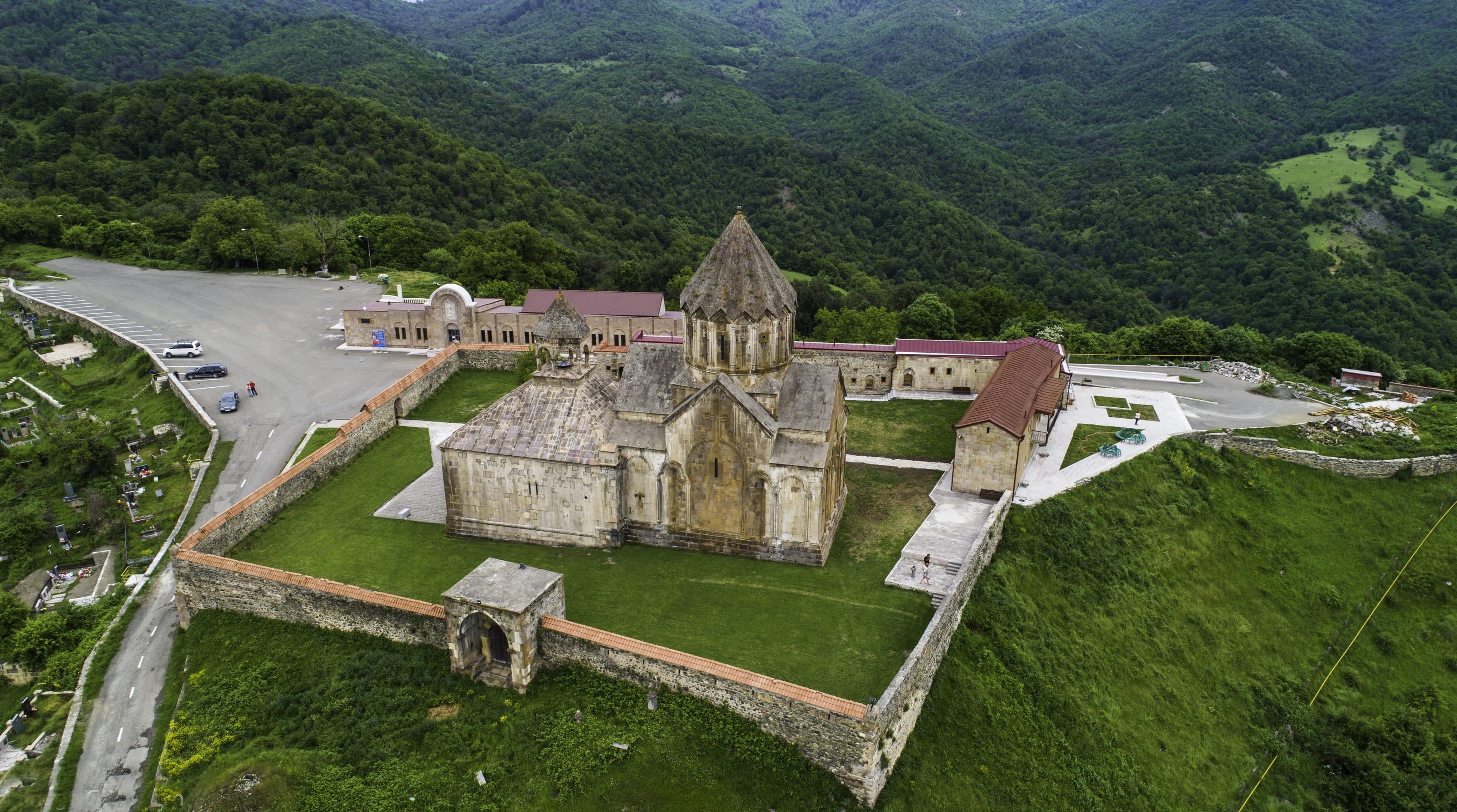
Gandzasar Monastery, 2018. Photo: Vahagn Grigoryan, CC BY-SA 4.0. Cropped and colour-graded; this derivative is offered under the same licence.

A record of Artsakh that stays up.
Digital Artsakh keeps the record somewhere it does not depend on anyone's permission. There is a comprehensive timeline of events, running from the 8th century BCE to this year. There is a map which tracks Artsakh's native Armenian population throughout the years. And there are long-form essays built on that record, every claim footnoted to a source you can open. A searchable, tagged primary source archive is being built next.
Timeline
The chronological record, event by event, each entry linked to its primary sources. 116 events, from the 8th century BCE to today.
Explore →
Interactive Map
Scroll through the years and watch Armenian presence across Artsakh change town by town: populations growing, then emptying.
Explore →
Essays
Long-form writing built on the record: the emptying of 2023, the legal file, and a century of census numbers, every claim footnoted to its source.
Explore →
Primary Source Archive
PlannedA searchable, tagged collection of documents, testimonies, and photographs.
This Day in History
PlannedA daily entry pulled from the archive, so the record is never standing still.
New features are added as they are completed. Anything you can open here is finished and fully sourced; anything marked Planned is not built yet.
A record built to outlast the news cycle.
In September 2023 more than 100,000 Armenians left Artsakh in a single week. For the first time since antiquity, the land was without its Armenian population. The story is now largely told in the past tense, by people who were not there, and often by the people who emptied it.
Digital Artsakh exists so that the record does not depend on anyone's memory or anyone's goodwill. Every claim here is tied to something a stranger can check: UN Security Council resolutions, ICJ orders, European Court judgments, human rights field investigations, census volumes, treaty texts, and photographs whose licences and provenance we publish alongside them.
We do not use Azerbaijani state sources, and we do not print Azeri names for Armenian places. We do include events that reflect badly on the Armenian side when independent investigators documented them, because an archive that only carries what flatters us is not an archive. Where a claim rests only on Armenian sources, we say so, on the entry itself.
It is built by students, in the open, and it is not finished. Artsakh is not a closed chapter, and neither is this.